
Intel to acquire Classiq to become full-stack quantum computer provider
This article looks inside Classiq's patent portfolio to understand the technologies it has sought to protect, how its innovation focus has developed, and what Intel stands to gain from the acquisition.
On 26 October 2026, Intel announced a definitive agreement to acquire Classiq, an Israeli quantum computing software company specialising in automated quantum algorithm synthesis.
Intel did not disclose the financial terms of the acquisition, although Bloomberg News reported the deal was valued at approximately US$2.3 billion. The transaction is expected to close in the first half of 2027, subject to regulatory approvals.
According to the announcement, the acquisition brings together Intel's silicon spin-qubit technology, semiconductor manufacturing expertise and existing quantum software capabilities with Classiq's quantum software platform.
This article looks inside Classiq's patent portfolio to understand the technologies it has sought to protect, how its innovation focus has developed, and what Intel stands to gain from the acquisition.
Classiq's patent portfolio is small and growing steadily
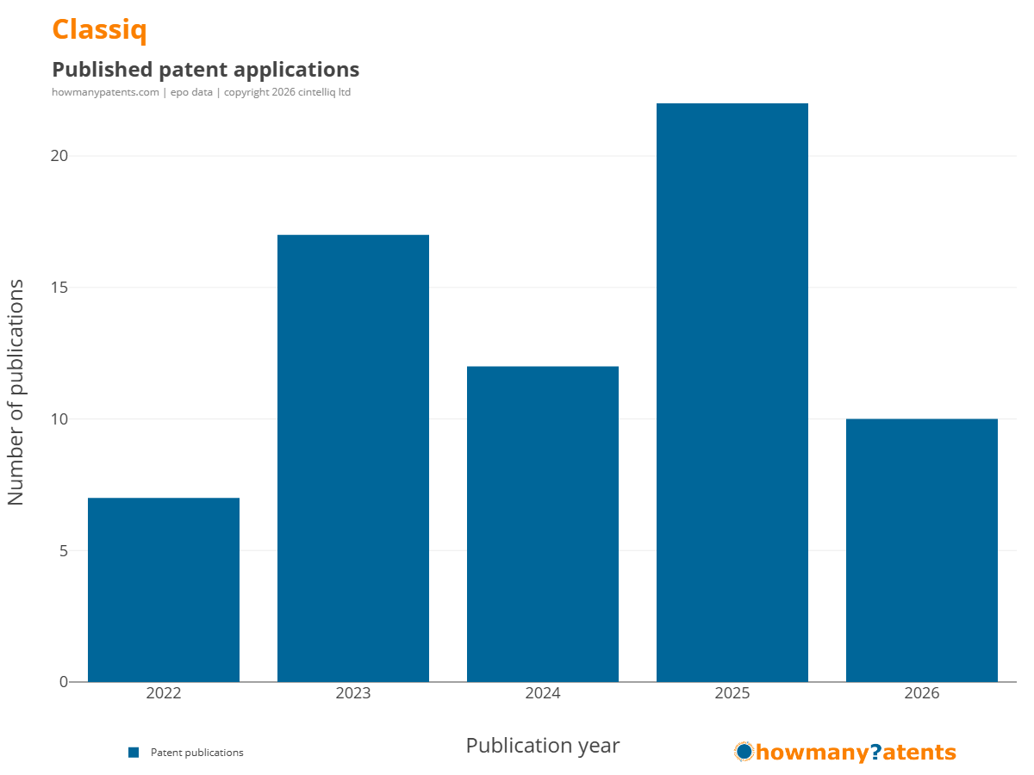
Since 2022, Classiq has published 68 patent applications across 44 patent families. The number of applications published each year has ranged from 7 to 22, with the highest number recorded in 2025. Several applications can belong to the same patent family, often reflecting filings for the same invention in different countries.
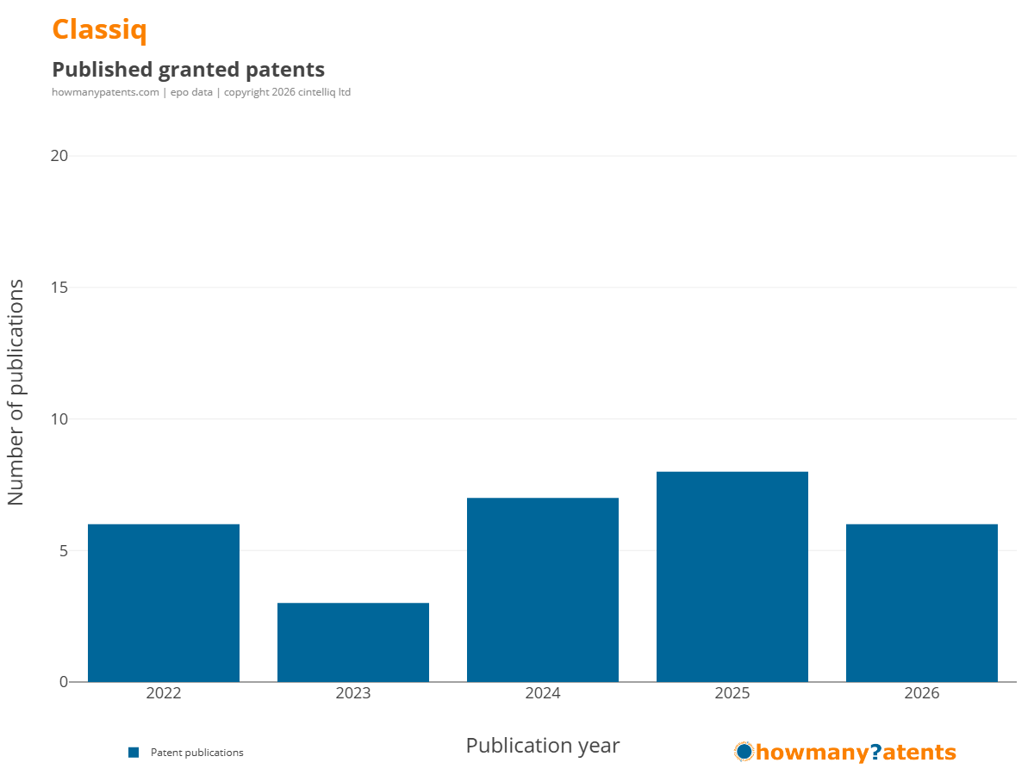
Classiq has received 30 granted patents across 24 patent families since 2022. The number of patents granted each year has ranged from 3 to 8. As patent examination can take several years, granted patents typically relate to inventions filed in earlier years.
Classiq's patent filing strategy is focused on the US, despite its Israeli origins
Despite being based in Israel, Classiq has concentrated its patent filing activity in the US, with no patent applications identified in Europe (EP) or Israel (IL).
Classiq has also filed international patent applications through the Patent Cooperation Treaty (PCT), preserving the option to seek patent protection in other jurisdictions. However, these applications have not resulted in any identified national or regional filings outside the US.
Given that Classiq's earliest patent filings date back to 2021, the absence of European or Israeli applications is particularly notable. It suggests that Classiq has prioritised patent protection in the US rather than pursuing a broader international filing strategy.
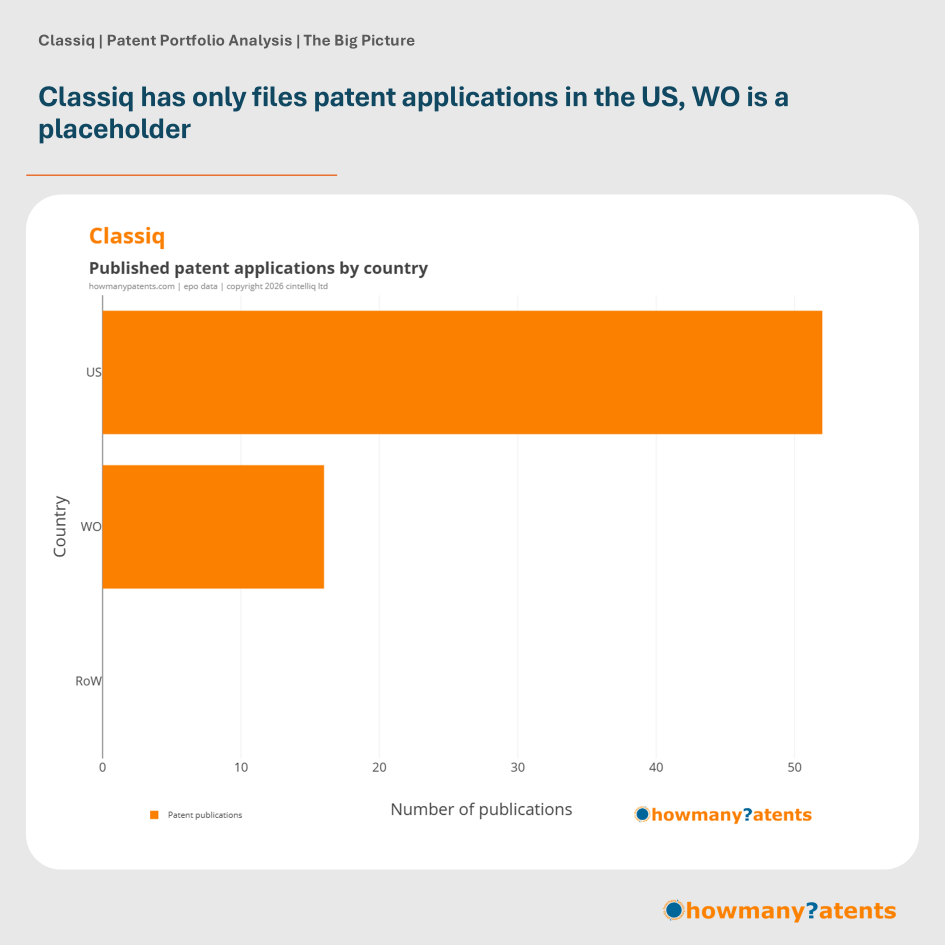
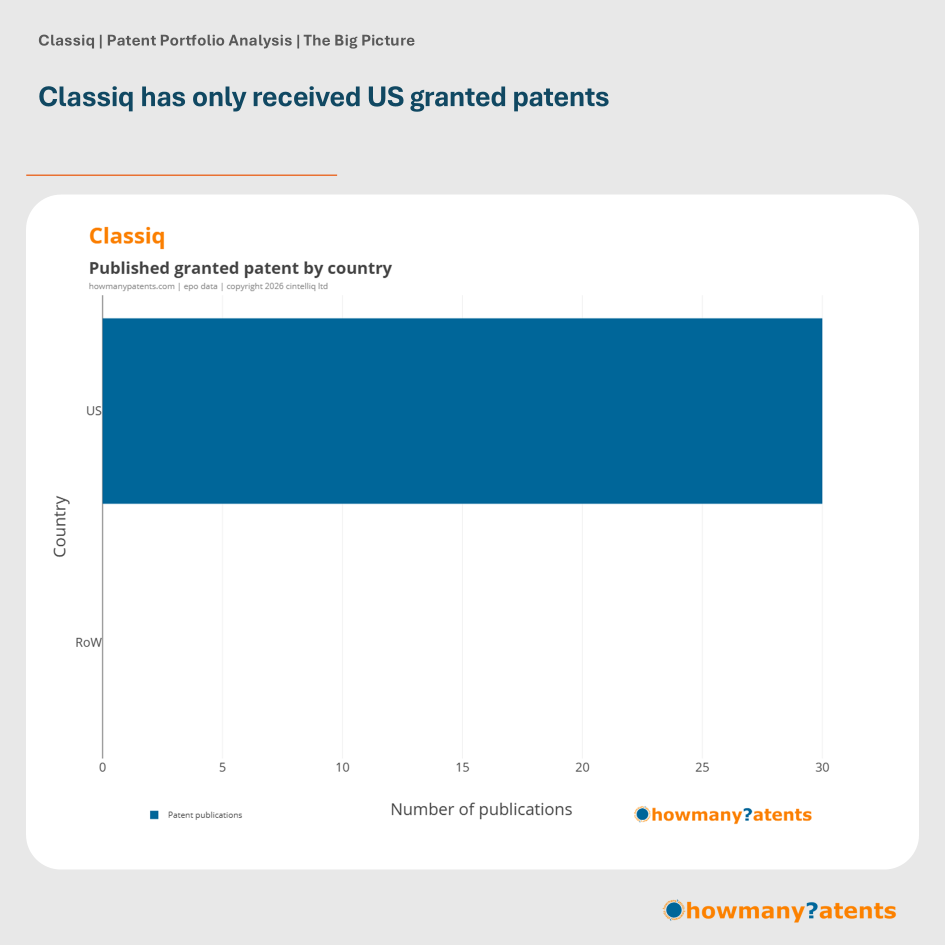
As a result of only filing patent applications in the US, Classiq has only US granted patents.
Classiq's patent families cover five themes
Between 2021 and 2025, Classiq's patent portfolio grew to encompass 44 patent families, covering five principal technology areas.
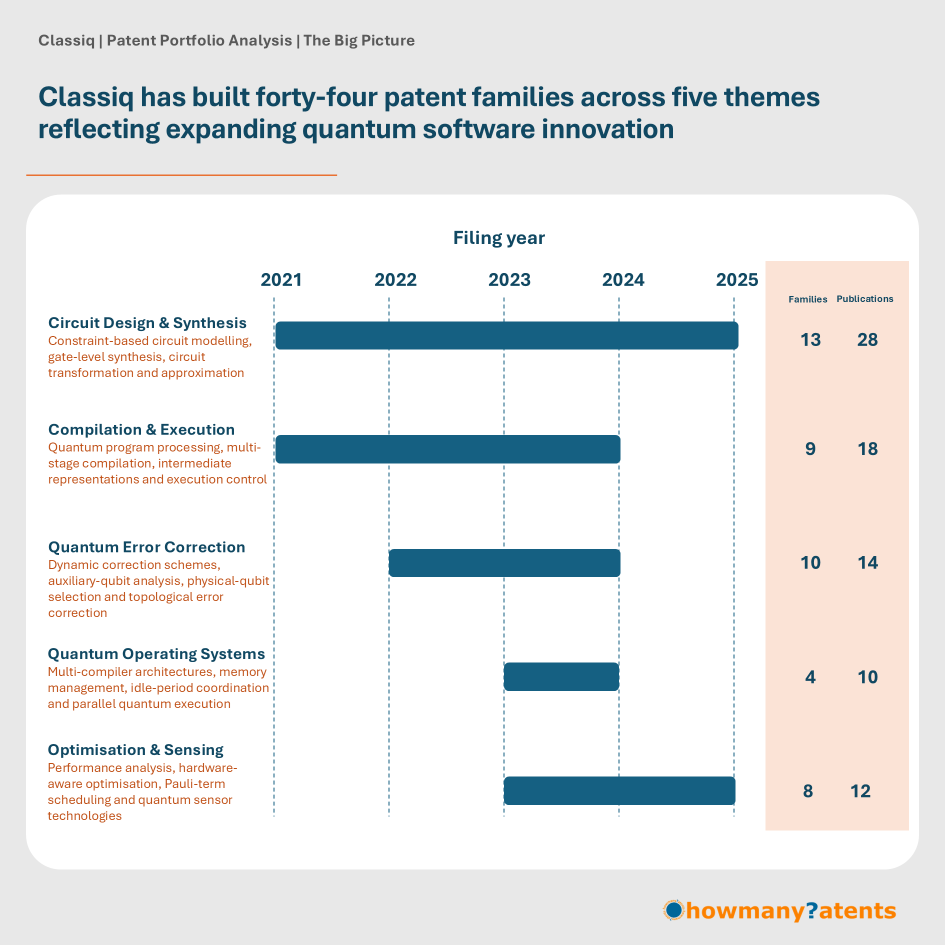
The earliest patent families focused on quantum circuit design and synthesis, including circuit modelling, gate-level synthesis and circuit transformation. Alongside these developments, patents relating to compilation and execution addressed the processing, compilation and efficient execution of quantum programs.
From 2022, the portfolio expanded into quantum error correction, initially covering dynamic correction schemes, auxiliary-qubit analysis and physical-qubit selection, followed by more advanced techniques involving topological error correction and circuit layouts.
A further development emerged in 2023 with patent families relating to quantum operating systems, covering multi-compiler architectures, memory management and parallel execution of quantum operations.
The fifth technology area, optimisation and sensing, encompasses performance analysis, circuit scheduling, hardware-aware optimisation and quantum sensing technologies. These inventions reflect a broader focus on improving the efficiency and practical application of quantum computing systems.
Taken together, the five technology areas show how Classiq's patent portfolio has evolved from circuit design and synthesis towards a wider range of software, system-level and hardware-aware technologies. Rather than representing distinct stages of development, several of these areas have evolved in parallel.
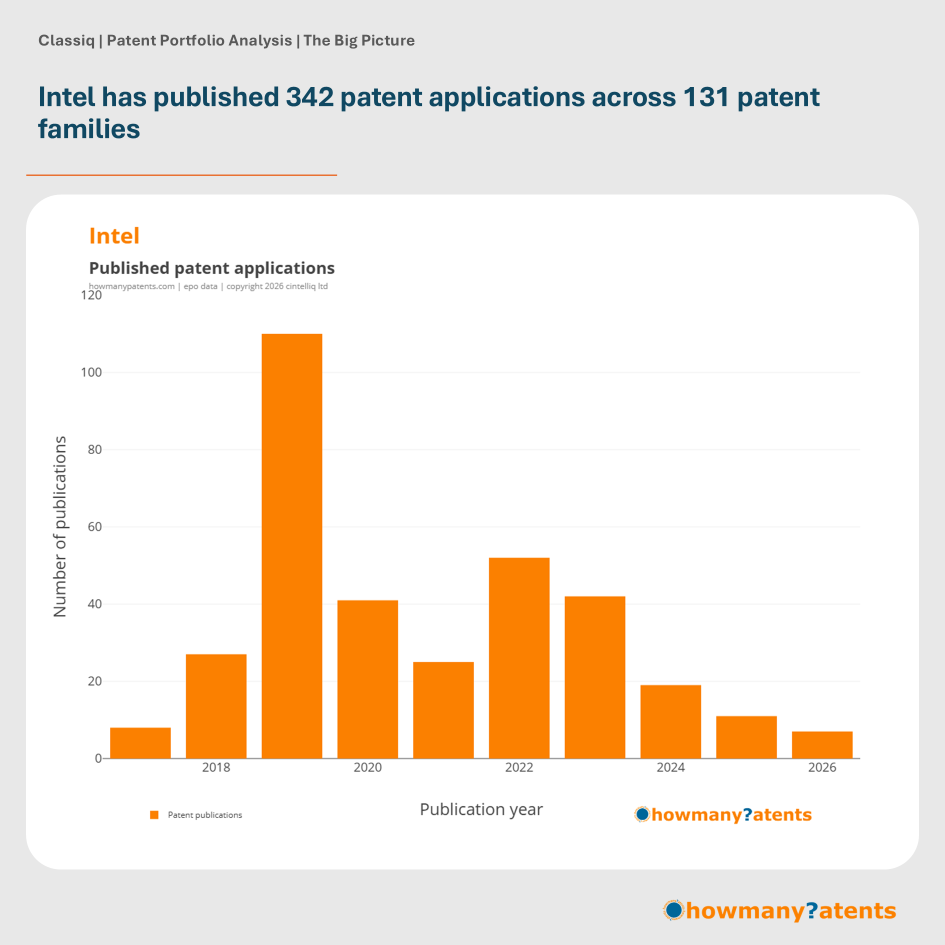
Intel patent portfolio has grown since 2017, peaking in 2019
Intel began publishing quantum computing patent applications in 2017, with 342 patent applications published by mid-2026. Filing activity peaked in 2018, when Intel filed more than 100 applications. In recent years, this has declined to fewer than 20 applications annually.
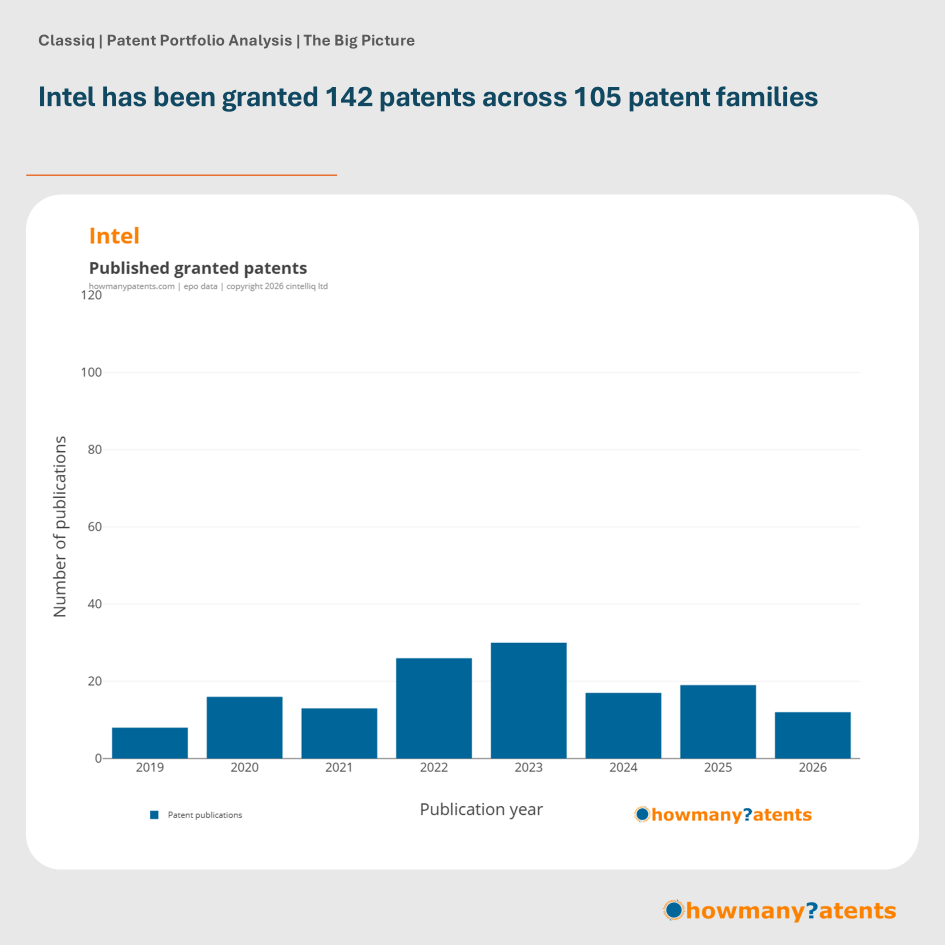
Intel has been granted 142 patents, across 105 patent families.
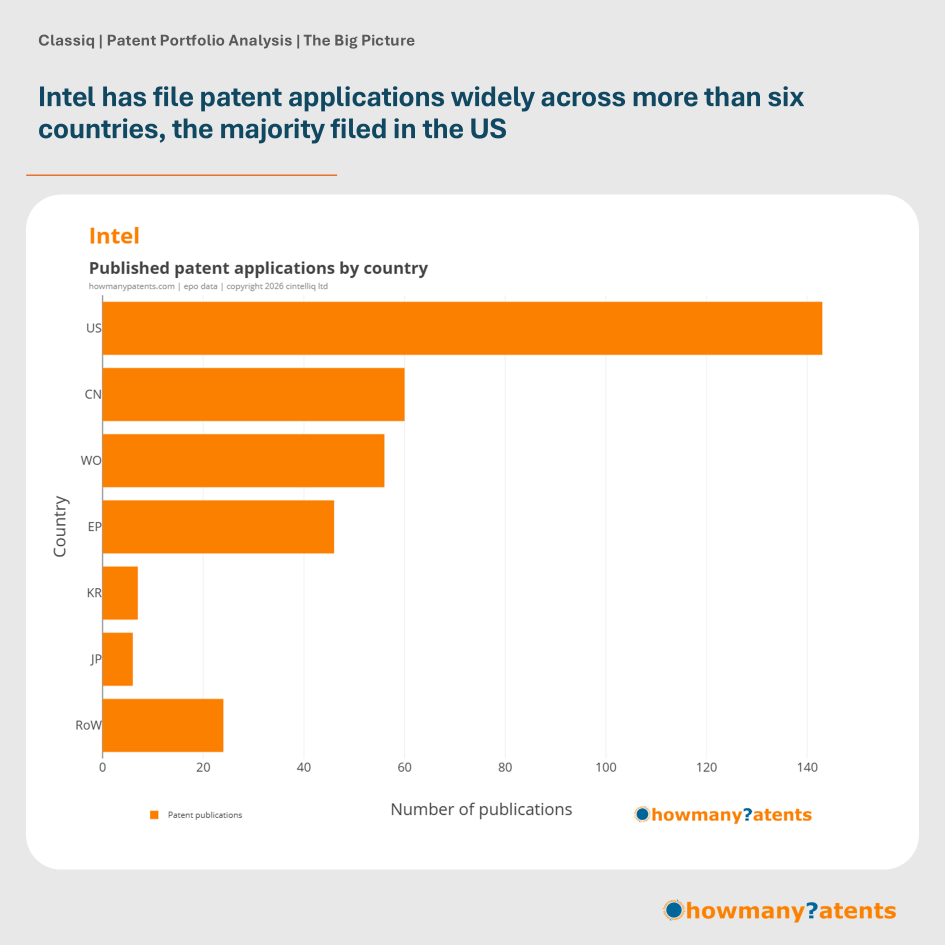
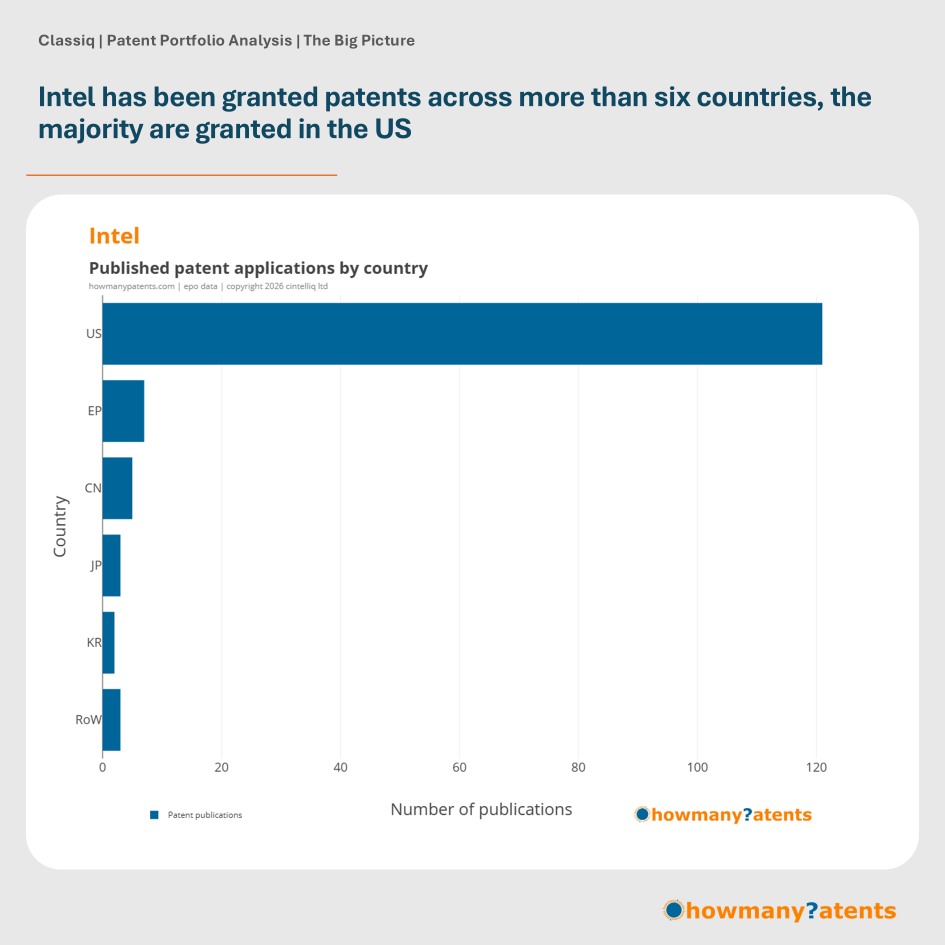
Intel has pursued patent protection across several jurisdictions, with filings concentrated in the US, China (CN) and Europe (EP).
However, the majority of Intel's granted patents identified in the portfolio are US patents.
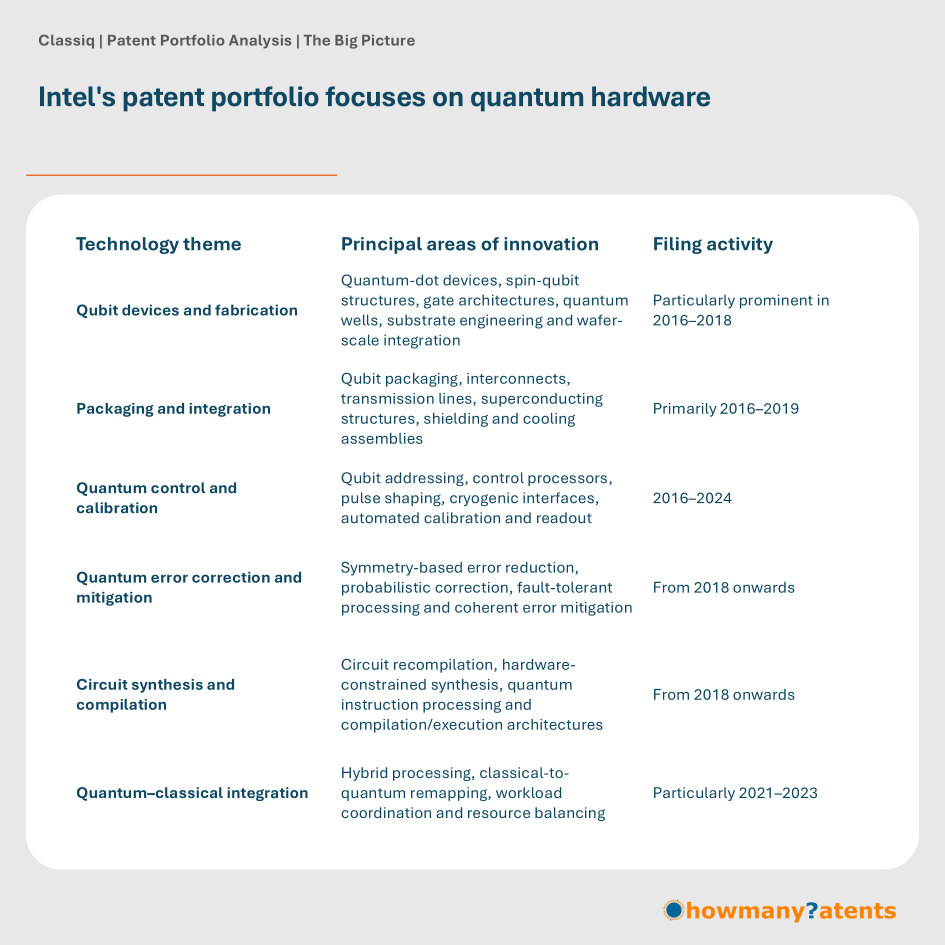
Intel patent portfolio's focuses on quantum computing hardware
Intel's quantum computing patent portfolio covers semiconductor-based qubit devices, fabrication methods, packaging, control systems, error correction and quantum software. The hardware-related inventions include quantum-dot structures, gate architectures, wafer-scale spin-qubit integration and technologies for connecting and controlling qubits.
The portfolio also contains applications covering quantum circuit synthesis under hardware constraints, circuit recompilation to compensate for hardware drift, quantum computing performance simulation and quantum–classical compilation. Other inventions address automated qubit calibration, fault-tolerant processing and error mitigation.
Conclusion
From a patent perspective, the acquisition offers Intel an opportunity to strengthen its quantum software capabilities alongside its existing hardware and manufacturing expertise.
- Intel's proposed acquisition of Classiq would bring together two companies with different approaches to quantum computing innovation.
- Intel has been developing quantum computing technologies for close a decade, with a substantial patent portfolio covering its activities in the field.
- Classiq's smaller and more recent portfolio focuses on quantum circuit design, synthesis, compilation, execution and other software technologies.
- Classiq's 44 patent families demonstrate that its technology development extends beyond automated quantum algorithm synthesis into a broader range of capabilities needed to develop and operate quantum computing systems.
- The geographic filing strategies are also markedly different. While Intel has pursued patent protection across several jurisdictions, Classiq's patent filings are concentrated in the US, despite its Israeli origins. Helping to strengthen it's main market of commercialisation.
Classiq's portfolio provides a potentially valuable addition to Intel's ambitions to become a full-stack quantum computing provider.
Sources
Intel to Acquire Classiq to Create a Full-stack Quantum Computing Platform
https://www.intel.com/content/www/us/en/newsroom/news/corporate/intel-classiq-accelerate-scalable-quantum-computing.html
Intel to buy quantum firm Classiq for about $2.3 billion, Bloomberg News reports, By Reuters, October 27, 2026
https://www.reuters.com/technology/intel-buy-quantum-firm-classiq-about-23-billion-bloomberg-news-reports-2026-10-27/